






When Kindness Gets in the Way of Growth
Many of the leaders I work with pride themselves on being kind.
They care deeply about their people. They value respect, inclusion, and psychological safety. And yet, they are often frustrated because, despite good intentions, performance plateaus, and the same issues keep resurfacing.
The pattern I see again and again is this: kindness is being practiced as comfort rather than care.
It takes courage to be kind.
The Two Kinds of Kindness Leaders Confuse
Most leadership challenges with feedback do not stem from a lack of kindness; they stem from misunderstanding it.
Kindness rooted in humanity:
This is the form of kindness most leaders are comfortable with. It focuses on empathy, respect, and the protection of dignity. It shows up as being considerate of others’ feelings, wanting to avoid embarrassment or conflict, giving people the benefit of the doubt, and creating a sense of emotional safety.
This kind of kindness is essential. Without it, trust erodes quickly.
But on its own, it has a shadow side.
When leaders rely exclusively on humanity-based kindness, they often avoid hard conversations. They soften messages until they lose meaning. They tolerate behavior that quietly undermines the team, because addressing it feels unkind.
Kindness expressed through difficult feedback:
This second form of kindness is where many leaders struggle.
It is kindness grounded in responsibility, growth, and long-term impact. It asks what truth needs to be said, what pattern needs to change, and what the cost of not naming this is.
This kind of kindness introduces discomfort, but it does so in service of clarity and development, not control or criticism.
Most leaders do not avoid this because they do not care. They avoid it because they care a lot.
What This Looks Like in Real Life
A common challenge I see with clients is collaboration.
Leaders will say things like, “My team is not stepping up,” “We have smart people, but we are not leveraging them well,” or “Everyone agrees in meetings, but execution falls apart.”
Often, underneath this is feedback that has never been clearly given.
I have seen talented leaders unconsciously overvalue people who think like them, communicate like them, or bring similar strengths, while unintentionally sidelining others. Not out of ego or malice, but out of habit.
Fifteen years ago, a senior HR leader named Stewart sat across from me and said something I did not want to hear.
He acknowledged my strength in strategy, then paused and told me I was not fully valuing contributions that differed from my own. I listened more closely to voices that mirrored my thinking, and in doing so, I was unintentionally limiting collaboration and my own effectiveness.
The words landed hard. I remember the discomfort, the tears rolling down my face. My intention and impact did not match. I cared deeply about the work and the people, and yet I could see, almost in real time, that he was right.
What made the moment unforgettable was not just the message, but how it was delivered. Stewart was clear, calm, and deeply respectful. There was no judgment, only an unmistakable belief that I was capable of more.
That conversation stayed with me long after it ended. It changed how I listened, how I partnered, and how I defined leadership. Over time, I noticed strengths in others that I lacked and, more importantly, valued them. The impact on my work, my relationships, and my leadership was profound.
Looking back, that feedback was not easy, but it was an act of real kindness. It reshaped how I view talent, and it continues to shape how I coach leaders through similar moments when honesty, offered with care, can change everything.
Why Leaders Hold Back and Why It Costs Them
Many clients tell me, “I do not want to demotivate them,” “They are already under pressure,” or “I do not want to damage the relationship,” “I don’t want to make a big change now.”
But what often goes unspoken is this: avoiding feedback does not preserve the relationship; it weakens it.
People sense when truth is being withheld. High performers especially want clarity. When expectations remain unspoken, leaders become frustrated, teams become misaligned, and growth stalls.
The Leadership Shift That Changes Everything
The most effective leaders I work with learn to hold two truths at once.
I care about you as a person, and I care about the impact we create together.
This is where humanity-based kindness and feedback-based kindness meet.
It sounds like, “This may be uncomfortable, but it matters,” “I want to share this because I believe in your potential,” and “I am on your side, even as we talk about this.”
When leaders make this shift, feedback becomes less about correction and more about partnership.
A Question for Leaders
If you are hesitating to give feedback, ask yourself these questions:
- How am I protecting their dignity, or protecting myself from discomfort?
- What is the long-term cost of staying silent?
- What might become possible if I spoke with both care and clarity?
Final Thought
Kindness is not the absence of discomfort. It is the presence of care. And sometimes, the most human thing we can do for our clients, our teams, and our relationships is to tell the truth with respect and courage.
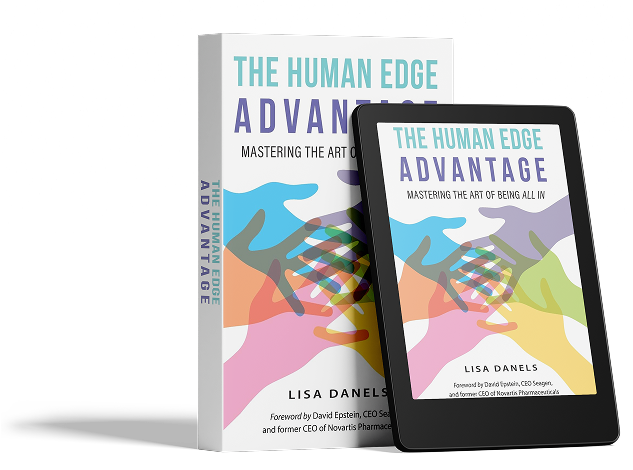
Follow Lisa Danels and Human Edge for more insights.
Click here if you want to learn more about humanistic leadership and team development solutions.
Human Edge is a global leader in humancentric leadership assessment and development, empowering individuals, teams, and organizations to unlock their full potential. Guided by science and driven by empathy, Human Edge transforms behavioral insight into practical, personalized growth experiences that help leaders show up with authenticity, clarity, and purpose.
Founded in 2017, Human Edge brings together experts in psychometrics, psychology, instructional design, and leadership development to deliver evidence-based solutions that create measurable impact. Through innovative products like the suite of CORE assessments, experiential learning modules, and integrated coaching, Human Edge supports leaders and experts across life sciences, FMCG, industrial, and technology sectors, achieving a 94% client retention rate and transforming more than 10,000 leaders worldwide.
With over 25,000 assessments completed and a growing global partner ecosystem, Human Edge is pioneering a new standard for humanistic leadership in an era shaped by AI and constant change. Its mission is to elevate human potential through deeply personalized, science-backed development that fuels sustainable growth, stronger teams, and meaningful performance outcomes.