











With confidence, you have won before you have started. With humility, you have the wisdom to keep learning.
Leadership in the modern world demands more than strategic brilliance or decisiveness. It requires a paradoxical balance: the ability to stand tall with confidence while kneeling low with humility. When these two forces converge, they produce leaders who inspire trust, foster resilient teams, and leave a lasting impact.
Why Confidence Alone Is Not Enough
Confidence is the engine of leadership. It fuels vision, assures followers, and instills courage in the face of adversity. Research shows that confident leaders are more effective at fostering creativity among their team members. When leaders act with confidence, they create an environment that is more receptive to new ideas, experimentation, and risk-taking, which in turn leads to higher engagement and innovation.
As Eleanor Roosevelt once said:
You gain strength, courage, and confidence by every experience in which you really stop to look fear in the face.
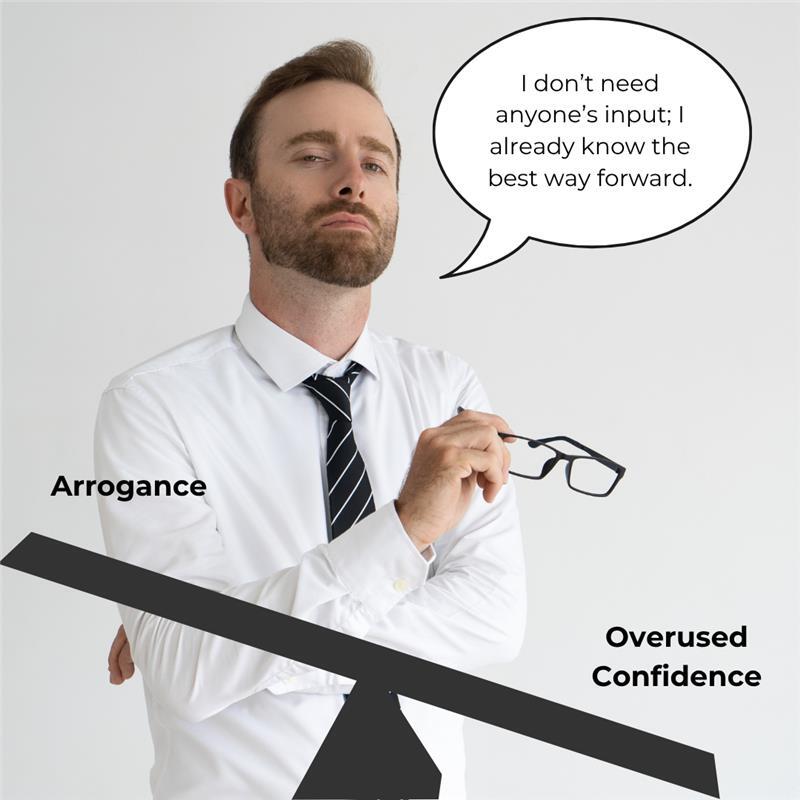
Yet unchecked confidence turns into arrogance. Research indicates that confidence has a significant impact on how leaders are perceived. Confident leaders are often seen as more competent and capable, which increases their influence and effectiveness. However, this effect has its limits—when confidence tips into overconfidence, it undermines leadership effectiveness and erodes trust (Shipman & Mumford, 2011, The Leadership Quarterly). History is filled with leaders who believed too much in their own invincibility and refused to listen, leading to collapse. A leader who only broadcasts but never receives creates a culture of silence, not growth.
Why Humility Alone Is Not Enough
Humility grounds leaders in reality. It allows them to admit mistakes, seek feedback, and empower others. Jim Collins, in his classic book Good to Great, describes Level 5 leaders as those who “blend extreme personal humility with intense professional will.”
At its best, humility fosters a culture where people feel safe contributing. Research has shown that leaders who acknowledge their limitations, appreciate others’ strengths, and model teachability spark greater employee engagement and willingness to speak up. When people feel their ideas are heard and valued, they go beyond the minimum, offering creativity, ownership, and energy.
Humility also fuels progress. Teams led by humble leaders are more likely to reflect, adapt, and innovate together. One study found that humble leadership enhances “team reflexivity,” the shared habit of examining what works and what doesn’t. Put simply, humility doesn’t just keep egos in check; it helps entire teams learn and grow.
And perhaps most importantly, humility fosters psychological safety, that invisible but powerful force that makes people feel safe to share bold ideas, admit mistakes, and take risks. Leaders who demonstrate humility reduce defensiveness and open the door to trust and resilience
Yet, humility without confidence has a shadow side. Leaders who constantly downplay themselves or hesitate to make decisions can leave their teams adrift. Humility must be paired with the courage to act; otherwise, it risks becoming passivity rather than empowerment.

The Power of the Balance
Confidence and humility, when balanced, create leaders who are both bold and approachable. They dare to make decisions, but lack the wisdom to adjust them when needed.
Simon Sinek puts it well:
The ability to admit you do not know everything is the cornerstone of humility. The ability to act as though you do, until you figure it out, is the cornerstone of confidence.
Together, these traits form the foundation of authentic leadership. Employees don’t follow leaders because they are flawless; they follow them because they are real—both strong and human.
Cultivating Confidence
Confidence isn’t about pretending you know everything. It’s about believing you can figure it out. Leaders can cultivate confidence through deliberate practice:
Know Your Strengths
Take inventory of what you’re truly good at. Confidence is grounded in competence.
Confidence comes not from always being right but from not fearing to be wrong.
2. Build Inner Confidence
True confidence comes from the inside, not from how you perform on the outside. It is not about flawless delivery or constant success; it’s a deep belief in yourself and your abilities, even when you stumble. When leaders cultivate this inner assurance, they project authenticity, not arrogance.
3. Prepare Relentlessly
Confidence grows when preparation meets opportunity. Study your craft, learn your industry, anticipate scenarios. Surround yourself with mentors who inspire you, those who push you to grow, challenge your thinking, and guide you toward your highest potential.
3. Visualize Success
Athletes use visualization to win championships. Leaders can too. Picture yourself delivering that speech, guiding that negotiation, or steering through a crisis.
4. Take Action Despite Fear
Courage is not the absence of fear but moving forward despite it. The more risks you take, the stronger your confidence muscle becomes. Continually go outside your comfort zone and reach into your stretch zone.
Cultivating Humility
Humility is not weakness—it is strength under control. Here’s how leaders can develop it:
1. Practice Active Listening
Humility begins with listening. Confident leaders speak to inspire, but humble leaders listen to understand. When leaders set aside their egos and genuinely hear their people, they uncover insights, build trust, and foster belonging.
Most people do not listen with the intent to understand; they listen with the intent to reply.
Humility allows you to truly listen to others— to hear not just the words spoken, but the emotions, fears, and aspirations beneath them. By listening deeply, leaders give their teams the most precious gift: the feeling of being valued.
2. Seek Feedback
Invite criticism and thank those who offer it. It takes humility to admit you don’t have all the answers.
3. Celebrate Others’ Wins
Shift the spotlight. Humility multiplies when leaders lift their teams.
Pride is concerned with who is right. Humility is concerned with what is right.
4. Remember the Bigger Picture
Humility flows when leaders realize they are part of something greater than themselves, be it a cause, a mission, or humanity itself.
Practical Ways to Balance Both
Balancing confidence and humility is not an act achieved once; it’s a lifelong dance. Here are strategies leaders can use daily:
- Say “I don’t know” and “I believe we can” in the same conversation.
– Humility to admit gaps, confidence to express faith in the team’s ability.
- Model vulnerability.
– Share mistakes openly, then show how you’re moving forward with conviction.
- Alternate roles: teacher and student.
– Teach what you know confidently, but remain a learner in what you don’t.
- Anchor decisions in values.
– Confidence in making tough calls, humility in seeking wisdom before acting.
Stories of Balanced Leaders
Nelson Mandela
Mandela carried unshakeable confidence in the justice of his cause but approached his enemies with humility. His leadership dismantled apartheid and inspired reconciliation instead of revenge.
Satya Nadella
The Microsoft CEO is known for striking a balance between bold vision and a humble “learn-it-all” mindset. His humility in reshaping Microsoft’s culture has been as impactful as his confidence in cloud strategy.
Jacinda Ardern
New Zealand’s former Prime Minister demonstrated confidence in crisis (from terror attacks to the pandemic) while showing humility through empathy, listening, and vulnerability.
When Confidence Meets Humility in Teams
Leaders who embody this balance create a ripple effect:
- Teams feel safe: Humility fosters psychological safety.
- Teams feel inspired: Confidence sets bold goals.
- Teams feel valued: Humility acknowledges contributions.
- Teams feel unstoppable: Confidence reassures them in storms.
This balance creates a culture where people stretch themselves without fear of failure.
Reflection Exercise: Balancing Confidence and Humility?
As a leader, growth often stems from striking a balance between strength and openness. When you face a challenge, pause and ask yourself which path serves best right now.
Step 1: Read and Reflect
Choose the quote that speaks to your current situation:
- Confidence
“Believe you can and you’re halfway there.” – Theodore Roosevelt
- Humility
“Humility is not thinking less of yourself, it’s thinking of yourself less.” – C.S. Lewis
Step 2: Apply
- If the confidence quote resonates: Write down one bold step you will take today, even if it feels uncertain.
- If the humility quote resonates: Write down one way you will listen more deeply or invite another’s perspective today.
Step 3: Check Back
At the end of the day, ask yourself:
- Did leaning into this quality bring me closer to clarity, connection, or progress?
Final Inspiration
True leadership is not about standing above others or demanding to be followed. It is the courage to step forward with confidence, paired with the humility to listen, honor, and uplift those around you. Great leaders illuminate the path, not by their position, but by their example.
As John Maxwell reminds us:
A leader is one who knows the way, goes the way, and shows the way.


